CBC projects Pierre Poilievre will win Battle River-Crowfoot byelection
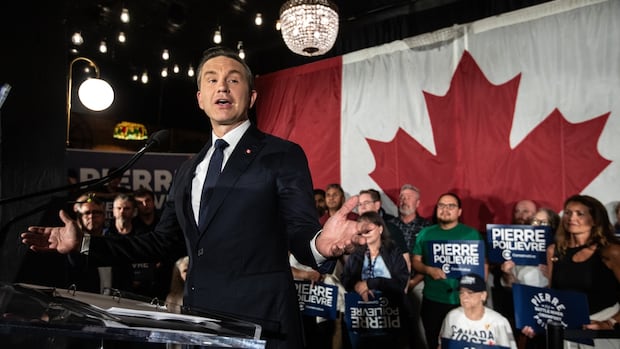
CBC projects Conservative Leader Pierre Poilievre will win the federal byelection for the riding of Battle River-Crowfoot Monday night.
With 265 of 286 polls reporting, Poilievre leads with 34,631 votes (80.1 per cent), followed by Independent candidate Bonnie Critchley with 4,298 votes (9.9 per cent) and Liberal Darcy Spady with 1,885 (4.4 per cent).
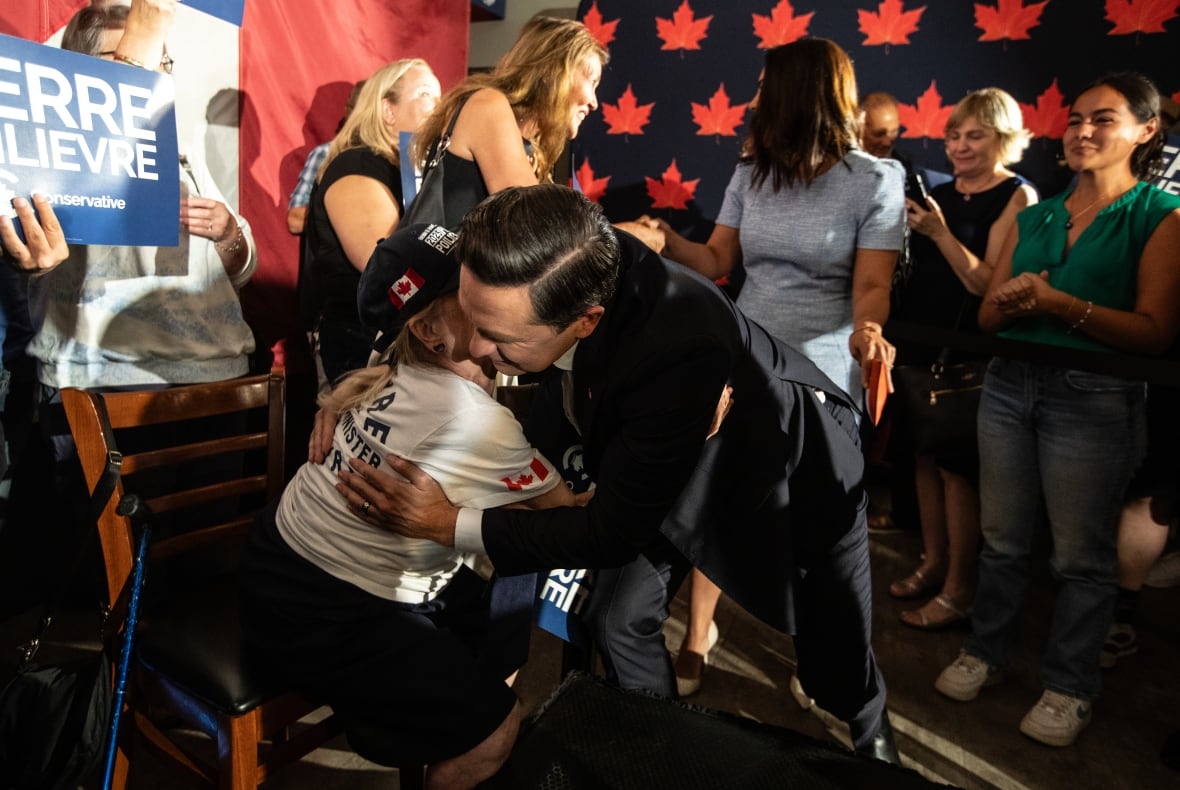
“Some might have thought it was a burden for me to come right off the campaign trail in a national campaign and go straight to knocking on doors, to travelling throughout a region of 56,000 square kilometres,” Poilievre said, speaking to supporters Monday night.
“This has been a privilege. Getting to know the people in this region has been the privilege of my life.”
Prime Minister Mark Carney called the byelection in June after Conservative MP Damien Kurek stepped down from his seat so Poilievre could run. The byelection had 214 candidates, making it the largest number of candidates on a federal ballot in Canadian history.
Conservative Leader Pierre Poilievre is projected to win a byelection in the Alberta riding of Battle River–Crowfoot, a win that will see him returning to the House of Commons this fall.
Poilievre lost his long-held Ottawa seat of Carleton in April, when Liberal candidate Bruce Fanjoy won that seat in an upset.
Kurek’s resignation came after he handily won the riding in April, receiving about 82.8 per cent of the vote. The history of the riding and its previous incarnations indicate it has been one of the safest blue seats in the country.
The Battle River-Crowfoot riding covers a large swath of eastern and central Alberta, encompassing communities like Drumheller, Hanna, Stettler, Camrose and Provost.
“They’re the kind of what you see is what you get, give you the shirt off their back, tell it like it is, common sense people,” Poilievre said Monday night.
“And they reinforced a lot of lessons that all of us in politics have to learn and relearn and relearn again. Humility and hard work. Loyalty and love.”
David Stewart, a professor emeritus of political science at the University of Calgary, said Monday was a good night for Poilievre in a string of months with not many other good nights.
“I think anybody who tells you they’re surprised that Pierre Poilievre won tonight is misleading you,” he said in an interview Monday night.
“The only question that was I think at stake is how big the victory would be and whether it would be enough that it didn’t allow questions to be raised about him not doing as well as his predecessor.”
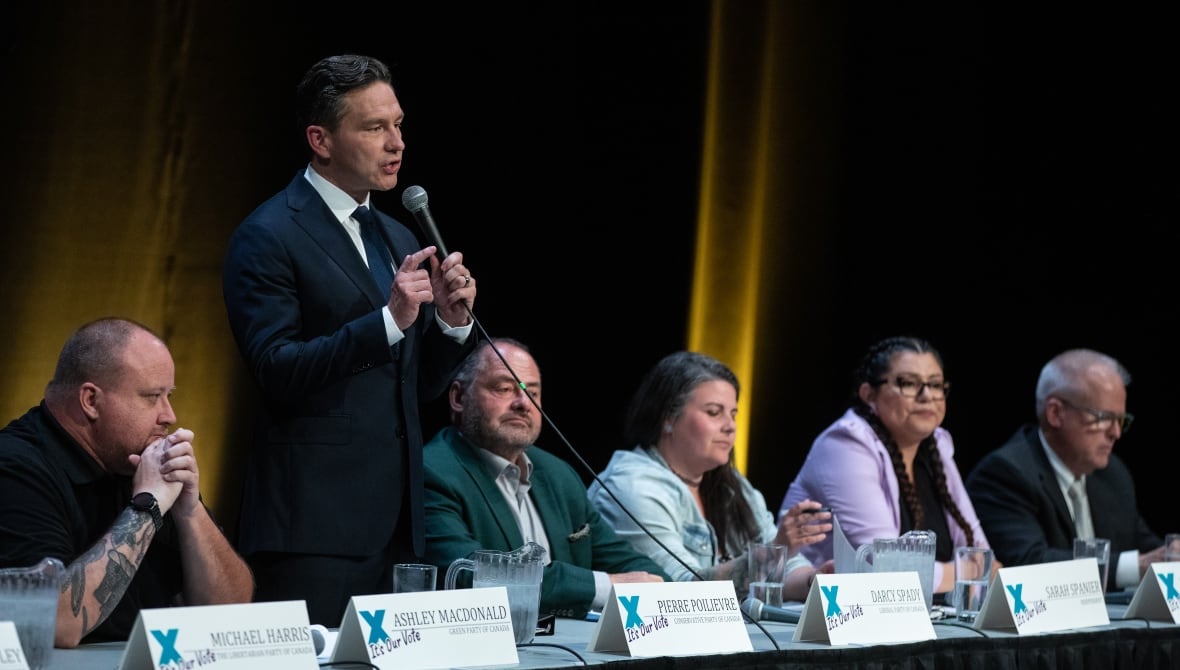
That byelection included Poilievre, Liberal candidate Spady, NDP candidate Katherine Swampy, Jonathan Bridges of the People’s Party of Canada, Ashley MacDonald of the Green Party and Independent candidate Critchley.
Critchley, speaking a couple hours before polls closed at her headquarters, told CBC she was not happy to be going through this process.
“To tell the truth, I’m tired, I’m frustrated, I’m really kind of angry that we’re even doing this again,” she said.
“We had picked the guy we wanted back in April. Now, we’re spending $2 million of taxpayer money on another man’s ego project.”
Despite that, she said she’s also feeling hopeful and buoyed by the support she’s been seeing.
Stewart said Critchley’s numbers tell a story of their own. He said it’s notable that an independent candidate garnered more support than the Liberal and NDP candidates combined.
“I thought that she had a very effective message about sort of parachuting and the wasted money in having a byelection just so soon after a a general election,” Stewart said.
“And the interesting thing, I think is that the controversy over the large number, record number of names on the ballot, I think ended up working in her favour because she was able to say, ‘Look, I’m not like these others. I think this is a kind of ridiculous thing to do and they’re meddling in our decision.'”
WATCH | Pierre Poilievre speaks to supporters:
For the first time ever, Elections Canada had all voters fill out a blank ballot.
Because of the record-breaking number of candidates, voters were provided with special write-in ballots instead of standard list-style ballots.
Longest Ballot Committee concerns
Most of the 214 candidates on the ballot were associated with a group of electoral reform advocates known as the Longest Ballot Committee. The committee organized candidates to run in byelections in recent years to promote electoral reform.
“I think tonight is also a bit of a slap in the face for the people who’ve organized these huge ballots, as it appears there was a backlash on it in the riding,” Stewart said.
“It didn’t even delay it. So I’m not sure what the point is anymore with that.”
Poilievre could not act as the Opposition leader in question period or participate in debate without a seat in the House of Commons.
The Conservative caucus chose former party leader Andrew Scheer to lead the Opposition in the House of Commons on a temporary basis.
Poilievre faces a Conservative Party of Canada leadership review in January after the Tories failed to form government in the last federal election.
If a leader does not resign, the party’s constitution requires members to vote on whether that leader should stay on at its next national convention.
“With this kind of result, I don’t think it has any impact on the leadership review,” Stewart said.
“If anything, maybe marginally positive, but people aren’t going to change their minds really about Mr. Poilievre because he was able to win a byelection in rural Alberta, in a riding that they’d won with over [80 per cent] of the vote in the last election.”