Keenan: Is RFK Jr. ‘Bonkers’ or is it time for a portable?
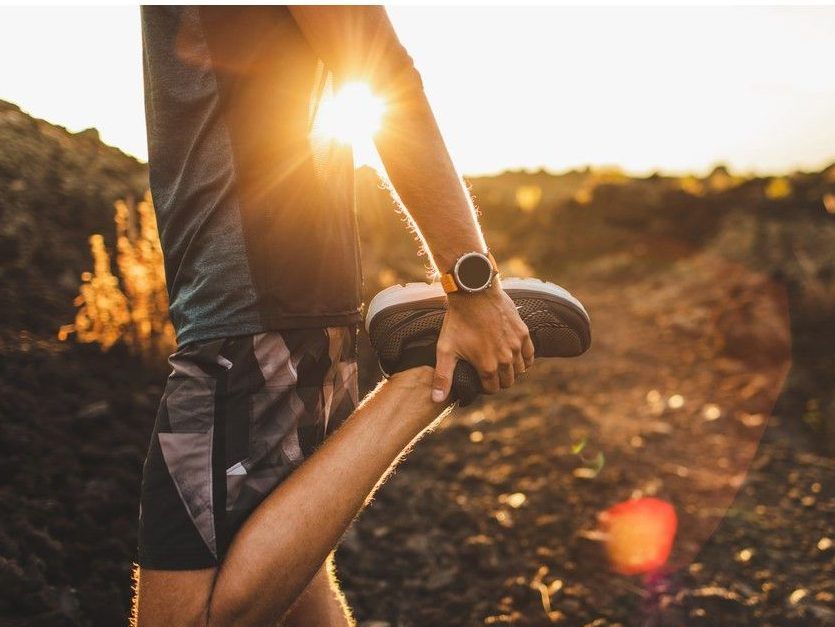
“We are about to launch one of the biggest advertising campaigns in HHS history, to encourage people to use wearables. It is a way in which they can take control of their own health.” With those words, American health and human services (HHS) Secretary Robert F. Kennedy, Jr. gave a boost to portable fitness equipment that is comparable to what his boss did when he parked a Tesla on the lawn of the White House. Both can live to regret these decisions.
The always entertaining UK Daily Mail newspaper immediately called the ‘Bonkers’ plan. Their senior health reporter, Luke Andrews, also pointed to the wonderful contradiction between collecting a health tracker on every American and RFK Jr.’s long -term opposition against supervision and exposing people to electromagnetic radiation.
Apart from all this madness aside, if you have not applied portable, as I have until recently, this might be a good time to consider one. A report from Statista shows that the Canadian Smartwatch ownership “will be 13.39 percent in 2025 and it is expected that 17.76 percent will hit by 2029.” They have no breakdown of gender for Canada, but American data show that more women than men use these devices, mainly for following fitness. As new functions come out, I suspect men will catch up. We love our gadgets, and there are even life -saving reasons to use a smartwatch.
Fitness trackers have a long history. Swiss watchmaker Abraham-Louis Perrelet created a rudimentary pedometer in 1780. He also built a human self -winding that could walk a watch for eight days after 15 minutes of walk.
Modern electronic devices date from the introduction of the Fitbit Tracker from 2009 for $ 99. Today you can pay more than $ 1,000 for a watch that measures multiple physical parameters and you even go back when you get lost on a hiking trail.
After about a decade with nothing on my wrist, I recently bought a mid-range smartwatch for around $ 300. You can go a lot higher and also find something that calls itself a smartwatch for $ 20. Warn those data. One person reported that the watch said they slept at all the wrong times. More disturbing is that some people have awakened with serious wristburns due to overheated cheap devices.
Are the good really accurate? You would certainly expect a smartwatch to count your steps well, because that problem was solved in 1780. What about more subtle parameters such as peripheral capillary oxygen saturation (SP02)? This is what they measure in a hospital or doctor’s office by placing a device that looks like a clothes peg on your finger. A drop can indicate the blood circulation or breathing problems. It can also help with detecting sleep apnea, a condition where breathing stops for 10 seconds or more.
A study published in Digital Health in 2022 showed that “Apple Watch Series 6 states of reduced blood oxygen saturation with SPO2 can detect reliably below 90 percent compared to a pulse oximeter of medical quality.”
Smartwatches vary in which other medical parameters they can measure. The master-end models have an electrocardiogram functionality and this possibility improves as artificial intelligence is integrated. Various studies show that they can play a role in detecting serious conditions, such as atrial fibrillation (AFIB). A recent article by researchers from the Yale School of Medicine concluded that “AI-amplified portable and portable devices represent a transforming force in cardiovascular care by making efficient, fair and accessible care directly possible in the communities.”
Closer to home, a beloved professor from the University of Calgary had some heart problems. His class spent the hat to buy an end of the term. It was a big class, so they could give him an Apple Watch that he still wears.
Following sleep was a great attraction for a smartwatch for me. Mine produces a daily sleep score, which can vary from 0 to 100. I achieved last night to 79, which I really liked. The manufacturer’s website, Garmin.com, explains the calculation and says: “It includes how much time you have spent, and the patterns that are formed between, the light, deep and REM sleeping stages. Experts say that these have an impact on your mental and physical recovery. Deep sleep helps with muscle recovery.”
Critics of health trackers note that some people are obsessed with their number in an unhealthy way. We may also send intimate information to a company that may not respect our privacy. At least I recommend using a newly created e -mail address that is not linked to your name when you sign up for a fitness tracking website.
If you need another reason, consider my favorite head of Gizmodo of all time: “Your fuel band knows when you have sex.” As author Adam Clark Estes wrote in 2013: “How else do you explain to get half an hour of exercise late at night without taking a single step?”
Secretary Kennedy, what do you think of that?
Tom Keenan is a award -winning journalist, public speaker, professor at the School of Architecture, Planning and Landscape at the University of Calgary, and author of the best -selling book Technocreep: The Surrender of Privacy and the Capitalization of intimacy.