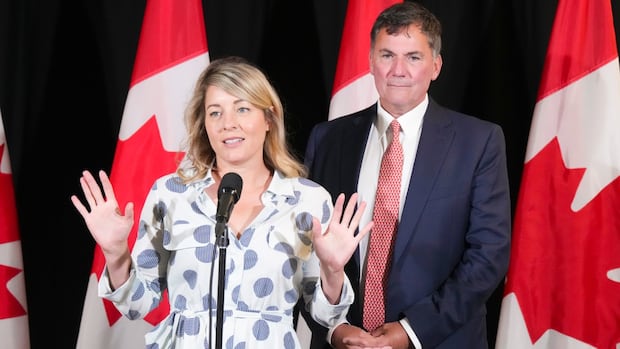
21, 2024. (Adrian Wyld/The Canadian Press)
Szuchewycz said he doesn’t believe penalties are the answer and that it’s “not a good idea to penalize people for participating in elections.”
He also dismissed the idea that his group’s efforts are a scam, saying “if it’s a scam, it’s a very open and transparent one.”
As for whether the Longest Ballot Committee will continue its efforts in future byelections, Szuchewycz was non-committal.
“We’re trying to get the message out there to the public and to politicians that we need a better system,” he said. “That’s our main goal.”
The Longest Ballot Committee in Alberta attempted to create the longest ballot in Canadian history for Monday’s federal byelection, but their efforts resulted in a shorter ballot instead. Despite the lack of a physical long ballot, the group managed to field over 200 candidates to run against Conservative Leader Pierre Poilievre in Battle River-Crowfoot, with their affiliated candidates receiving just over 300 votes collectively.
Organizer Tomas Szuchewycz expressed satisfaction with the experience, stating that the group’s message about the need for electoral reform was successfully communicated. Elections Canada responded to the challenge by issuing special write-in ballots, allowing voters to fill in the name of their preferred candidate.
The Longest Ballot Committee has been active in organizing candidates for byelections over the past five years, with Battle River-Crowfoot featuring the largest number of candidates so far. Szuchewycz emphasized the group’s desire for an independent, non-partisan body to oversee electoral reform, criticizing political parties for their reluctance to make government more representative.
The group’s efforts have prompted politicians like Poilievre to consider changes to election rules to prevent similar protests in the future. Poilievre has proposed legislation to limit the number of candidates a group can run in a single riding and increase the signature requirement for candidates. The Liberals have indicated openness to some changes, with discussions ongoing about potential reforms.
Candidates like Jayson Cowan, who ran in Battle River-Crowfoot with the Longest Ballot Committee, highlighted the importance of initiatives like theirs in promoting diversity and representation in politics. Cowan, who faced challenges gathering signatures as an Independent candidate in the past, credited the group for helping him get on the ballot.
As discussions continue about potential changes to election rules, Chief Electoral Officer Stéphane Perrault has suggested imposing penalties on individuals who sign multiple nomination papers to prevent long ballots. Szuchewycz expressed reservations about penalizing voters for participating in elections, emphasizing the group’s commitment to promoting a better electoral system.
While the future of the Longest Ballot Committee’s protests remains uncertain, Szuchewycz reiterated their goal of advocating for a more transparent and inclusive electoral process. Whether the group will continue its efforts in future byelections will depend on the response from the public and policymakers to their message. The Long Ballot Committee Continues to Advocate for Electoral Reform
Despite indications of potential rule changes on the horizon, the Long Ballot Committee in Canada is gaining more interest from individuals looking to participate in the political process.
According to committee member Szuchewycz, the group’s message that politicians should not be responsible for setting their own election rules due to the conflict of interest involved is resonating with the public. This has led to an increase in the number of candidates willing to run for office.
However, the success of the committee’s recruitment efforts has not necessarily translated into electoral victories. Last year, candidate Félix-Antoine Hamel made Canadian electoral history by receiving zero votes in a Toronto byelection. Since then, numerous long-ballot candidates have faced similar outcomes, including 75 individuals in the Battle River-Crowfoot riding.
One such candidate, Brian Wishart, who received no votes, emphasized that his focus is on highlighting the flaws in the current electoral system rather than personal success. Wishart previously voted using a ranked ballot in London’s 2018 mayoral election and expressed disappointment when the Ontario government discontinued the initiative.
Despite facing challenges, other long-ballot candidates like Cowan remain optimistic about the impact of their participation in the political process. Cowan, who received just one vote in a recent election, emphasized the importance of diverse voices in politics, particularly those representing marginalized communities.
Looking ahead, Szuchewycz stated that the Long Ballot Committee will continue its advocacy efforts, adapting as necessary based on any forthcoming legislative changes. The committee remains committed to promoting electoral reform and encouraging greater participation in the democratic process.
As the landscape of Canadian politics evolves, the Long Ballot Committee stands as a symbol of grassroots activism and a reminder of the importance of inclusive and fair electoral practices. The Benefits of Mindfulness Meditation
In today’s fast-paced world, it’s easy to get caught up in the hustle and bustle of everyday life. With so many demands on our time and energy, it can be difficult to find a moment of peace and quiet. That’s where mindfulness meditation comes in.
Mindfulness meditation is a mental practice that involves focusing on the present moment without judgment. By paying attention to our thoughts and feelings in a non-reactive way, we can cultivate a sense of inner calm and clarity. This can be especially beneficial for reducing stress and anxiety, improving focus and concentration, and enhancing overall well-being.
One of the key benefits of mindfulness meditation is its ability to reduce stress. When we practice mindfulness, we train our minds to be more aware of our thoughts and emotions, allowing us to respond to stressful situations with greater ease and equanimity. By cultivating this sense of mindfulness, we can learn to let go of negative thought patterns and cultivate a more positive outlook on life.
In addition to reducing stress, mindfulness meditation can also improve focus and concentration. By training our minds to be more present in the moment, we can enhance our ability to concentrate on tasks and activities. This can be especially beneficial for students or professionals who need to stay focused and productive throughout the day.
Furthermore, mindfulness meditation has been shown to have a positive impact on overall well-being. By learning to be more present in the moment, we can develop a greater sense of self-awareness and self-compassion. This can lead to improved relationships with others, as well as a greater sense of inner peace and contentment.
Overall, mindfulness meditation is a powerful tool for improving mental and emotional well-being. By taking the time to cultivate mindfulness in our daily lives, we can reduce stress, improve focus and concentration, and enhance our overall sense of well-being. So why not give it a try and see the benefits for yourself?