Is the zero-emission vehicle mandate dead or merely sleeping?
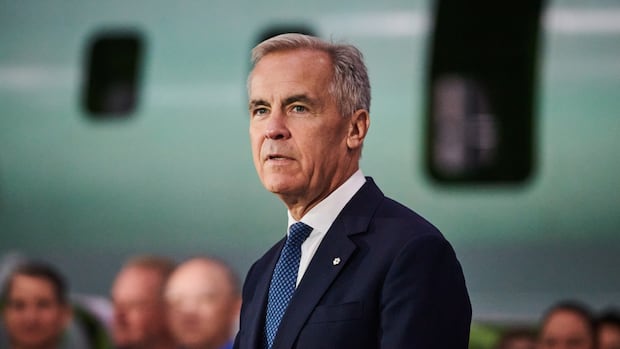
Mark Carney’s announcement on Friday regarding the delay in implementing the federal government’s zero-emission vehicle mandate has sparked controversy and debate. The decision to postpone the mandate by at least a year has been seen as a setback for climate policy under the new prime minister. Conservative Leader Pierre Poilievre, who had been advocating for the abandonment of the policy, celebrated the delay as a victory for his party.
Poilievre criticized the prime minister, labeling the delay as a “clumsy retreat” and accusing Carney of flip-flopping on the issue. The ZEV mandate, aimed at reducing greenhouse gas emissions from the transportation sector, will now undergo a 60-day review as part of a larger assessment of Canada’s climate competitiveness strategy.
The electric vehicle availability standard, known as the ZEV mandate, sets sales targets for automakers in Canada, with the next year’s target set at 20 percent. Carney inherited a troubled policy, similar to the federal carbon tax that was scrapped earlier this year. The expiration of the EV consumer rebate in January led to a decline in sales, prompting industry calls for relief amidst American tariffs on the automotive sector.
While other countries have made adjustments to their ZEV mandates, the fate of Canada’s mandate remains uncertain. Carney emphasized the government’s commitment to reducing greenhouse gases and hinted at potential modifications to the mandate to achieve better results. Clean Energy Canada and the Pembina Institute offered suggestions for improving the mandate, including incentives for affordable electric vehicles and adjustments to tariffs on Chinese-made EVs.
Despite the delay in the ZEV mandate, questions remain about how Canada will address emissions in the transportation sector. Poilievre criticized the mandate but did not offer alternative solutions for reducing emissions. As discussions continue on the future of the mandate, stakeholders await further updates on Canada’s climate competitiveness strategy. Mark Carney, the newly elected Prime Minister, has been known for his dedication to combating climate change. With a background as the UN’s special envoy on climate action and finance, Carney has made it clear that addressing climate change is not only a moral obligation but also essential for global competitiveness.
However, Carney’s first move as Prime Minister was to repeal the consumer carbon tax and put the ZEV mandate under review. The future of the proposed cap on emissions from the oil and gas sector is also uncertain. This has raised concerns among environmentalists, with Rick Smith, president of the Canadian Climate Institute, calling for swift action on climate policy.
Despite the uncertainties, Carney has expressed his commitment to maintaining and enhancing carbon-pricing benchmarks for industrial emissions. He has also emphasized the importance of selecting infrastructure projects that contribute to clean growth and align with Canada’s climate objectives.
The formation of an “environment caucus” within the Liberal parliamentary caucus suggests that there is pressure on Carney to not only adjust existing policies but also to define his own government’s climate agenda. As Carney navigates through these challenges, it will be interesting to see how his climate strategy evolves and what policies will shape his government’s approach to combating climate change.