Labour vote splitting as Canada’s political parties shift policies to attract workers’ support
The Changing Landscape of Canadian Politics and the Labour Movement
A year ago, former NDP leader Jagmeet Singh delivered a Labour Day message emphasizing his party’s unwavering support for working Canadians and their unions. However, recent events have shown a shift in the political landscape, with the NDP losing touch with its traditional base of union voters.
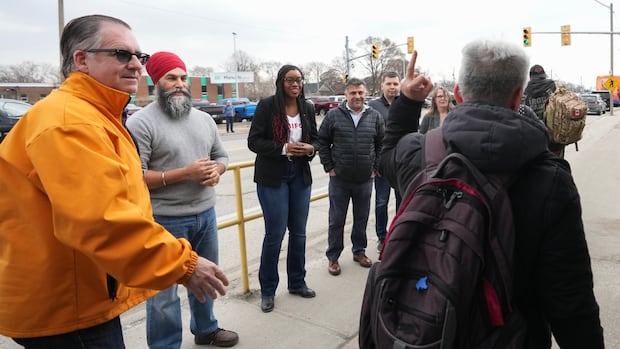
During the last federal election, Singh’s attempt to connect with auto workers in Windsor, Ontario, following news of new auto tariffs from U.S. President Donald Trump, was met with indifference. Many workers expressed a preference for the Conservatives and Leader Pierre Poilievre, signaling a weakening grip of the NDP on union voters.
The election results further confirmed this trend, as the NDP was shut out of Ontario, including key union-heavy ridings in cities like Hamilton and Windsor. This marked a significant departure from the past, where unions and workers were considered a safe vote for the NDP.
Senator Hassan Yussuff, former president of the Canadian Labour Congress, highlighted the increasing recognition of the power of unionized workers by political parties. Both the Liberals and Conservatives have adjusted their policies to appeal to organized labor, leaving the NDP struggling to reconnect with its roots.
Interim NDP Leader Don Davies acknowledged the need for the party to realign with its original goal of amplifying the voices of workers on the federal stage. While the NDP received endorsements from major labor organizations, the Conservatives were successful in winning over many union voters in manufacturing towns.
Amanda Galbraith, a Conservative strategist, pointed to the efforts of Ontario Premier Doug Ford and former Conservative leader Erin O’Toole in appealing to working-class voters. She noted that the Conservatives have worked to shed their image as the party of “big business” to broaden their voter base.
Steven High, a history professor, highlighted a fundamental shift in the political landscape with the rise of right-wing populism. He noted that voters without higher education are increasingly turning to right-wing parties, as seen in recent elections in Canada, the U.S., and Germany.
The weakening hold of the NDP on organized labor has led to increased attention from other parties, with efforts to soften anti-union rhetoric and court union support. This shift has prompted reflection within the NDP and organized labor on the need to reestablish their connection and focus on representing working-class people.
Charlie Angus, a longtime NDP MP, described the election results as a “wake-up call” for both the party and organized labor. He emphasized the importance of rekindling the historical bond between the NDP and unions, recognizing the need to stay true to the party’s founding mission of political representation for working-class individuals.
As the political landscape continues to evolve, the relationship between political parties and organized labor will play a crucial role in shaping Canada’s future direction. The NDP’s challenge now lies in regaining the trust and support of union voters while staying true to its core values of advocating for working-class Canadians.