Dem and GOP governors urge Trump to ‘let the states play a role’ in immigration decisions
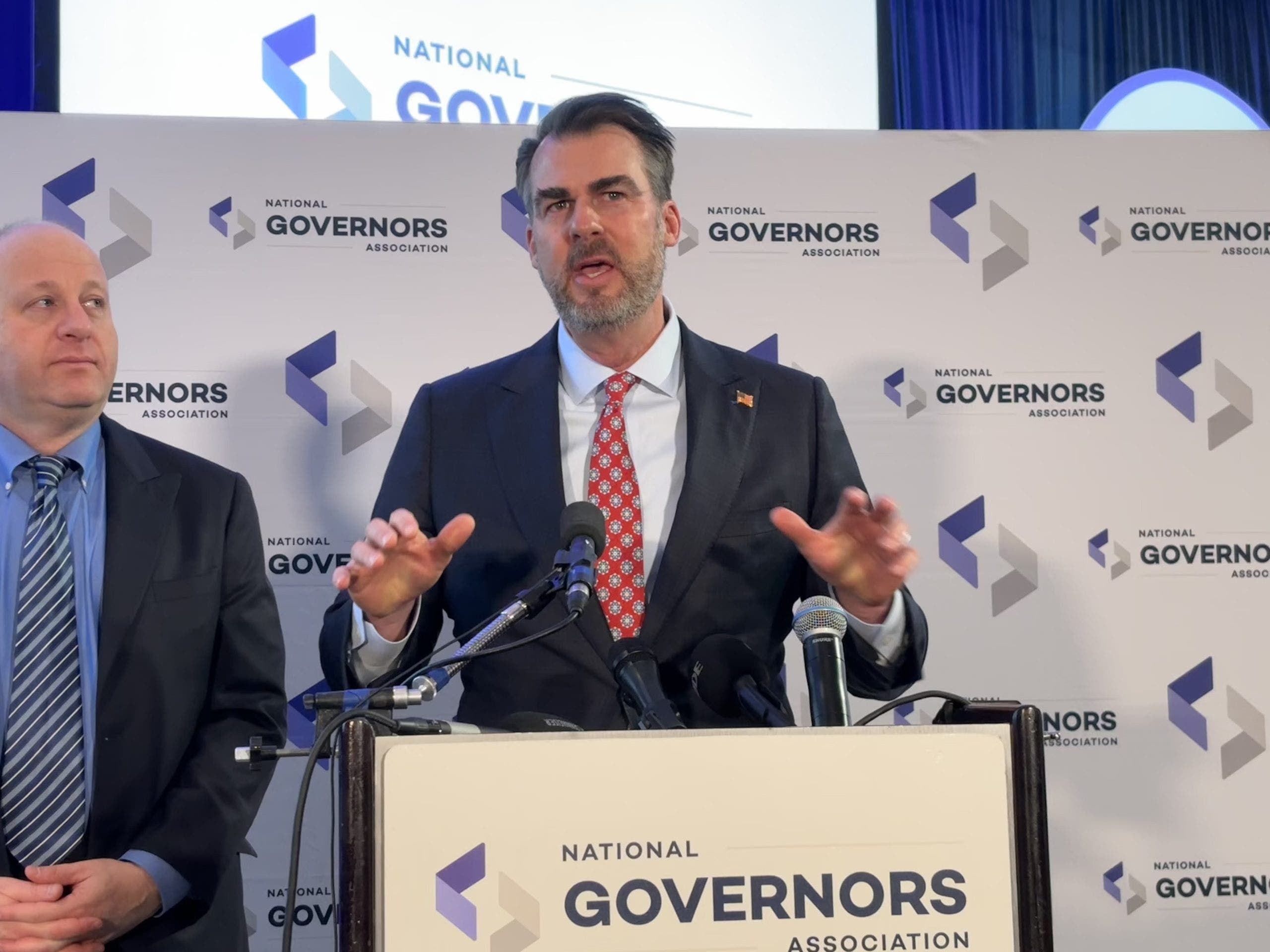
Two governors, one a Democrat and the other a Republican, found common ground at a National Governors Association meeting in Washington, D.C., on one of President Donald Trump’s most critical goals. Colorado Gov. Jared Polis, a Democrat and chairman of the National Governors Association, and Oklahoma Republican Gov. Kevin Stitt told Fox News Digital they want states to have a say in immigration enforcement and issuing work permits.
“We want to make sure we’re at the table in that with regard to immigration,” Polis told Fox News Digital. He said the idea that the states should have a seat at the table regarding immigration decisions “has a lot of support (among) both Democratic and Republican governors.”
Polis said states know what their labor needs are and could grant work permits after careful vetting. “Let us be able to grant those based on free background checks … and that’ll help our economic growth,” Polis said.
Stitt said he would encourage Trump to consider giving states the ability to grant workforce visas. “I’ve been an advocate for workforce visas at the state level,” Stitt said. “Matching employers with employees is something that governors should be able to do, whether it’s in the construction industry, the agricultural industry, engineering, aviation, whatever.”
He joked that the U.S. is “like [a team in] the NFL with the No. 1 draft pick.” Stitt also touted his state’s Operation Guardian, which he launched earlier this month to empower state and local law enforcement to better work with the Trump administration and ICE to deport criminal illegal aliens.
“I put my commissioner of public safety in charge to say, ‘How many people do we currently have in prison in the state of Oklahoma who are here illegally that have committed crimes? And then how can we work with the Trump administration to get them out of our state, out of our country and off of the taxpayer rolls in Oklahoma? So, I think that’s probably the first step,” Stitt said.
However, Stitt said there is a limit to what states should be doing to enforce immigration law. He proceeded to knock a recent effort by the Oklahoma State Department of Public Instruction to check the immigration status of children enrolled in public schools.
“In Oklahoma, I also said, ‘Listen, we’re not going to ask for immigration status for 6, 7, 8-year-old kids in school,” he said. But Oklahoma Superintendent of Public Instruction Ryan Walters, also a Republican, responded by saying Stitt’s stance on not checking school children’s immigration status undermines Trump’s agenda.
“It is unfortunate that Gov. Stitt is thwarting President Trump’s America First agenda,” Walters told Fox News Digital. “We cannot afford to stick our heads in the sand like Democrats and ignore the cost of illegals to taxpayers. President Trump was clear, Oklahoma voters were clear and we will defend the will of the president and Oklahomans.”
The bipartisan agreement between Polis and Stitt showcases the importance of collaboration across party lines to address crucial issues such as immigration and work permits. As they work together to find common ground, they demonstrate that unity and cooperation are essential in moving forward with impactful policy decisions.