Tesla opens retro diner with EV charging station in West Hollywood
Tesla’s New Retro Diner and Supercharging Station: A Game-Changer for EV Owners
Tesla has just unveiled its highly-anticipated retro diner and supercharging station in West Hollywood, California. This isn’t your average EV charging spot – it’s a full-blown experience that combines the nostalgia of American diners with a futuristic twist. But is this unique concept just a one-off, or could it be the future of EV charging nationwide? Let’s dive into what sets the Tesla Diner apart and explore whether this model could work in cities across the U.S.
What Sets Tesla Diner West Hollywood Apart
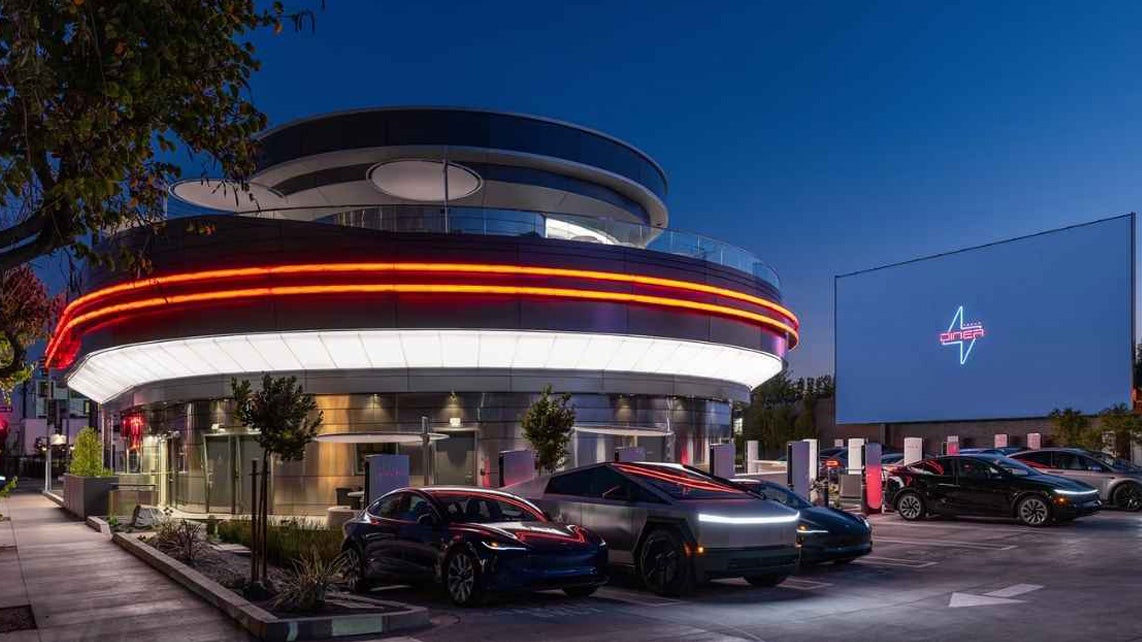
The Tesla Diner doesn’t hold back when it comes to offering a unique experience. It boasts the title of the largest urban supercharging station in the world and features:
– 80 V4 Supercharger stalls, available for both Tesla and NACS-compatible EVs
– Over 250 indoor and rooftop dining seats
– Two 66-foot LED megascreens showcasing movies and special content
– All-day dining with car-side service
– Exclusive Tesla merchandise
– A rooftop “Skypad” for breathtaking city views and drive-in-style entertainment
Whether you’re a Tesla owner looking to charge your vehicle or just someone in the mood for a classic American meal with a side of nostalgia, the Tesla Diner welcomes you to come in, dine, shop, and relax.
Retro Diner Vibes with a Clean Energy Twist
The Tesla Diner isn’t just about flashy aesthetics – it’s also environmentally conscious. The design incorporates solar canopies that help reduce carbon emissions by an estimated 26.6 million pounds of carbon dioxide per year. So, while you’re enjoying a delicious meal, your electric vehicle is quietly recharging under solar-powered shade.
The menu at Tesla Diner takes inspiration from traditional American diners, offering a range of quick bites and full meals made with high-quality ingredients. Whether you prefer dining indoors, soaking in rooftop views from the Skypad, or staying in your car for curbside service, Tesla Diner has options to suit your preference. Tesla drivers can even place food orders directly from their vehicle’s touchscreen and have their meal delivered right to their window – no need to step out of the driver’s seat.
Entertainment Hub Beyond Food and Charging
The Tesla Diner goes beyond just providing food and charging services. Guests can enjoy a variety of entertainment options, from retro sci-fi movies to live streams of SpaceX launches on massive LED screens. Whether you choose to watch from the comfort of your Tesla or relax on the Skypad, the experience is free for those actively charging or dining. While the experience is open to all, keep in mind that only credit cards or Apple Pay are accepted – cash transactions are not available.
Could This Concept Thrive in Other U.S. Cities?
Tesla has always been at the forefront of reimagining not just cars, but the entire driving experience. By transforming EV charging into a social and entertaining experience, Tesla is catering to drivers’ needs for both convenience and enjoyment. While the Tesla Diner model may not be suitable for every location, factors such as real estate costs, charging infrastructure, and regional preferences would need to be considered for expansion to other cities.
What Does This Mean for EV Owners?
For EV owners, particularly Tesla drivers, the Tesla Diner in West Hollywood offers a glimpse into the future of charging – seamless, social, and engaging. This shift indicates a broader trend in the industry, where EV brands are creating comprehensive ecosystems rather than just selling vehicles. This could mean more opportunities for drivers to relax, dine, shop, and charge all in one place. Expect to see more companies exploring the concept of “charging destinations,” whether it’s cafes, gyms, movie theaters, or co-working spaces tied to EV charging points.
Key Takeaways
The Tesla Diner isn’t just a conventional supercharging station – it’s a testing ground for a new era of charging experiences. By showcasing what the future could hold, Tesla is paving the way for charging hubs that compete not just on speed but on overall experience. This shift has significant implications for EV adoption, urban planning, and travel experiences across America.
Would you be willing to spend 30-45 minutes at a diner-movie-charging station, or do you see this concept as a Hollywood novelty? Share your thoughts with us at CyberGuy.com/Contact.
As EV technology continues to evolve, innovations like the Tesla Diner could reshape how we think about charging infrastructure and the overall driving experience. Stay tuned for more updates on the latest trends in EV technology and charging solutions.
Copyright 2025 CyberGuy.com. All rights reserved.
Author Bio:
Kurt “CyberGuy” Knutsson is an award-winning tech journalist known for his passion for technology, gear, and gadgets that enhance everyday life. Catch Kurt’s tech insights on Fox News & FOX Business during “FOX & Friends.” Have a tech question or story idea? Subscribe to Kurt’s free CyberGuy Newsletter and share your thoughts at CyberGuy.com.