‘Face of evil’: Catholic Church named after St. Patrick vandalized with Satanic message
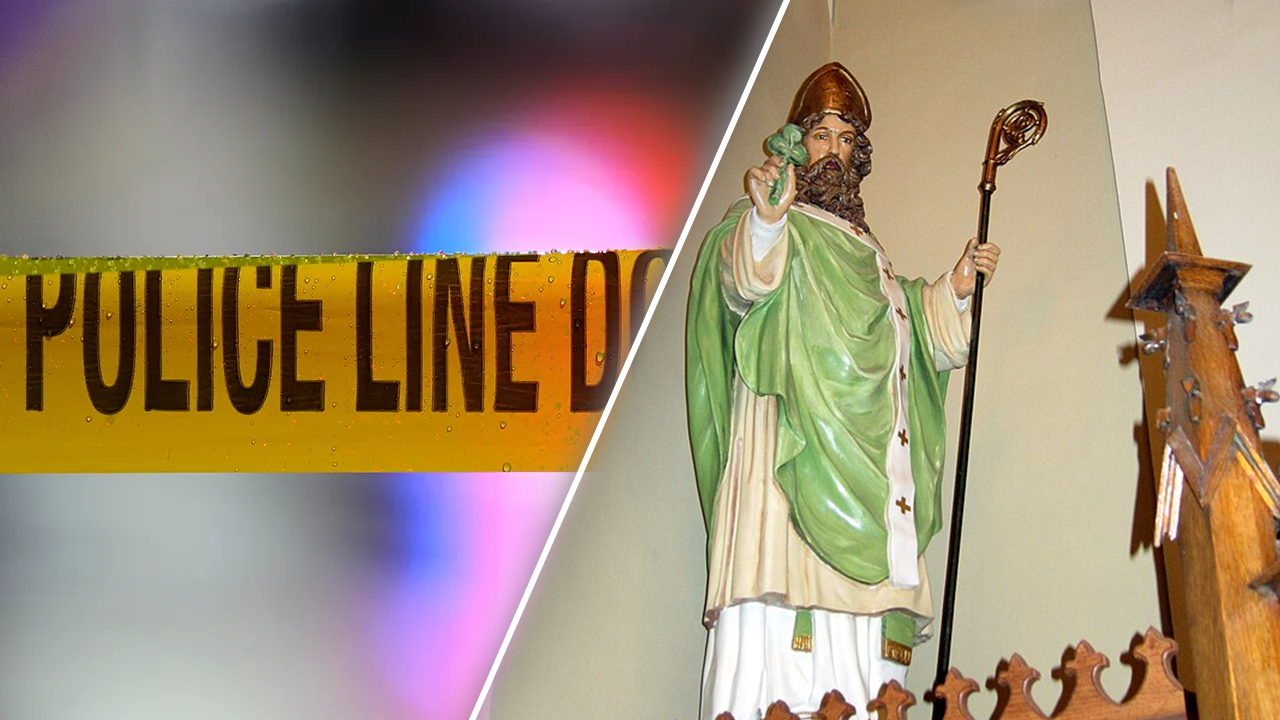
Federal and local authorities are currently investigating a possible hate crime that took place at a Catholic Church in Wichita, Kansas. The church, named after St. Patrick, was vandalized extensively, with the damage including the beheading of a statue of St. Patrick, the breaking of candles and windows, and the burning of an American flag. Additionally, a Satanic message was found scrawled on the church’s wall, which further heightened concerns about the nature of the attack.
A 23-year-old man has been arrested in connection to the case, but authorities are continuing their investigation to uncover more details about the incident. The Catholic Conference of Kansas released a statement condemning the vandalism, describing it as the “face of evil.” The conference also mentioned that the Satanic website referenced in the vandalism is associated with a group planning a Satanic worship ritual at the Kansas State Capitol.
Church members were unable to hold services on the following day due to the severity of the attack. The Wichita Police Department released a statement confirming that they are working with federal law enforcement to conduct a thorough investigation into the incident. The suspect, identified as a 23-year-old man from Saline County, was arrested in the early hours of Sunday and faces charges of Burglary, Criminal Desecration, and Criminal Damage to Property.
Wichita Police Chief Joe Sullivan expressed his disgust at the attack, emphasizing the importance of all places of worship being respected and safe for everyone. He reassured the public that such acts of vandalism would not be tolerated. Despite the traumatic event, the church congregation, primarily Hispanic, showed resilience by organizing a St. Patrick’s Day parade the following day.
Sullivan commended the swift action taken by law enforcement in apprehending the suspect, ensuring that he was taken into custody before causing further harm. The community came together in a display of solidarity and strength, showcasing their resilience in the face of adversity. It is crucial to uphold the values of tolerance and respect for all faiths, and incidents like this serve as a reminder of the importance of unity in the face of hatred.