Rabbits with strange horny growths spotted in Colorado
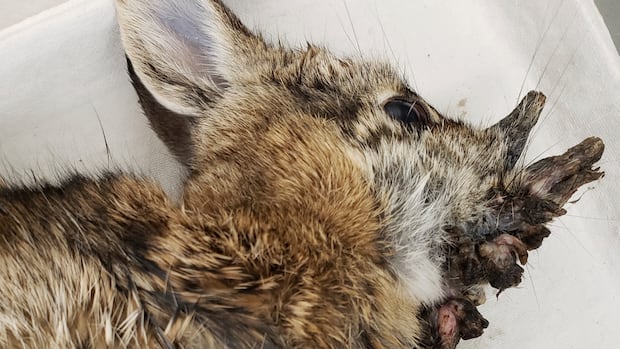
A group of rabbits in Colorado with grotesque, horny growths may seem directly from a low-budget horror film, but scientists say that there is no reason to be beaten-the hairy beings have only a relatively common virus.
The cottonails that are recently spotted in Fort Collins are infected with the mostly harmless Shope papillomavirusWhat causes wart -like growths that protrude from their faces as metastasizing horns.
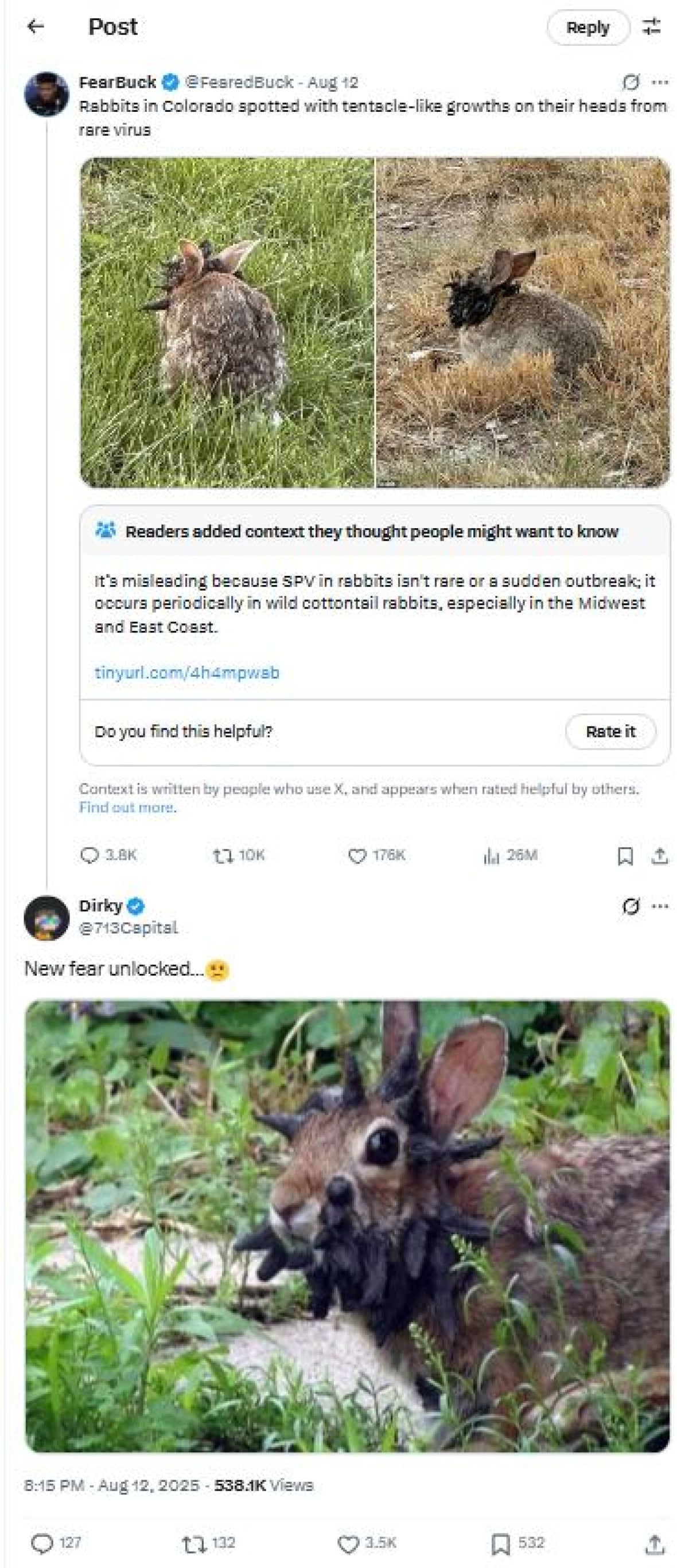
Viral photos have inspired a fluffing of non -fledged nicknames, including “Frankenstein Bunnies,” “Demon Rabbits” and “Zombie Rabbits.” But their condition is nothing new, inspiring old folklore and stimulating scientific research almost 100 years ago with the virus.
Rabbits with horny growths have been noticed in Colorado, so that speculation and concern are online. Scientists say that the rabbits have a harmless virus that has been around for decades.
The virus has probably influenced the age-old Jackalope-Mythe in North America, who told about a rabbit with antlers or horns, including animal variations. The disease in rabbits has also contributed to the knowledge of scientists about the relationship between viruses and cancer, such as the human papillomavirus, which causes cervical cancer.
The virus in rabbits is named after Dr. Richard E. Shope, a professor at Rockefeller University who discovered the disease in Cottontails in the 1930s.
News about the observations of rabbits in Fort Collins, 105 kilometers (65 miles) north of Denver, received attention after residents started spotting in the city and posted photos.
Kara van Hoose, a spokesperson for Colorado Parks and Wildlife, told the Associated Press on Wednesday that the desk received phone calls about the rabbits that are seen in Fort Collins.
She said it is not uncommon to see infected rabbits, especially in the summer, when the fleas and ticks that spread the virus are the most active.
The virus can spread from rabbit to rabbit, but not to other species, including people and pets, she said.
The growths look like warts, but can look like horns when they get longer, Van Hoose said.
The growths do not harm rabbits unless they grow on their eyes or mouth and interfere with food. The rabbits immune system can fight the virus and, as soon as they do, the growths will disappear, she said.