DC police accused of changing crime data before Trump federalization
NEWYou can now listen to Fox News articles!
Just weeks before President Donald Trump federalized the Washington, D.C., police force over crime woes, the Metropolitan Police Department was hit with accusations of allegedly juking crime stats for more favorable results.
“When our members respond to the scene of a felony offense where there is a victim reporting that a felony occurred, inevitably there will be a lieutenant or a captain that will show up on that scene and direct those members to take a report for a lesser offense,” D.C. Police Union chairman Gregg Pemberton told NBC Washington in July of an alleged trend to manipulate crime stats.
“So, instead of taking a report for a shooting or a stabbing or a carjacking, they will order that officer to take a report for a theft or an injured person to the hospital or a felony assault, which is not the same type of classification.”
The accusations from the union chief followed the police department suspending Washington, D.C., police commander Michael Pulliam in mid-May for allegedly changing crime statistics in his district, local media reported in July.
DC VIOLENCE HAS GROWN FAR MORE DEADLY, DESPITE DEMS CLAIMING 30-YEAR LOW
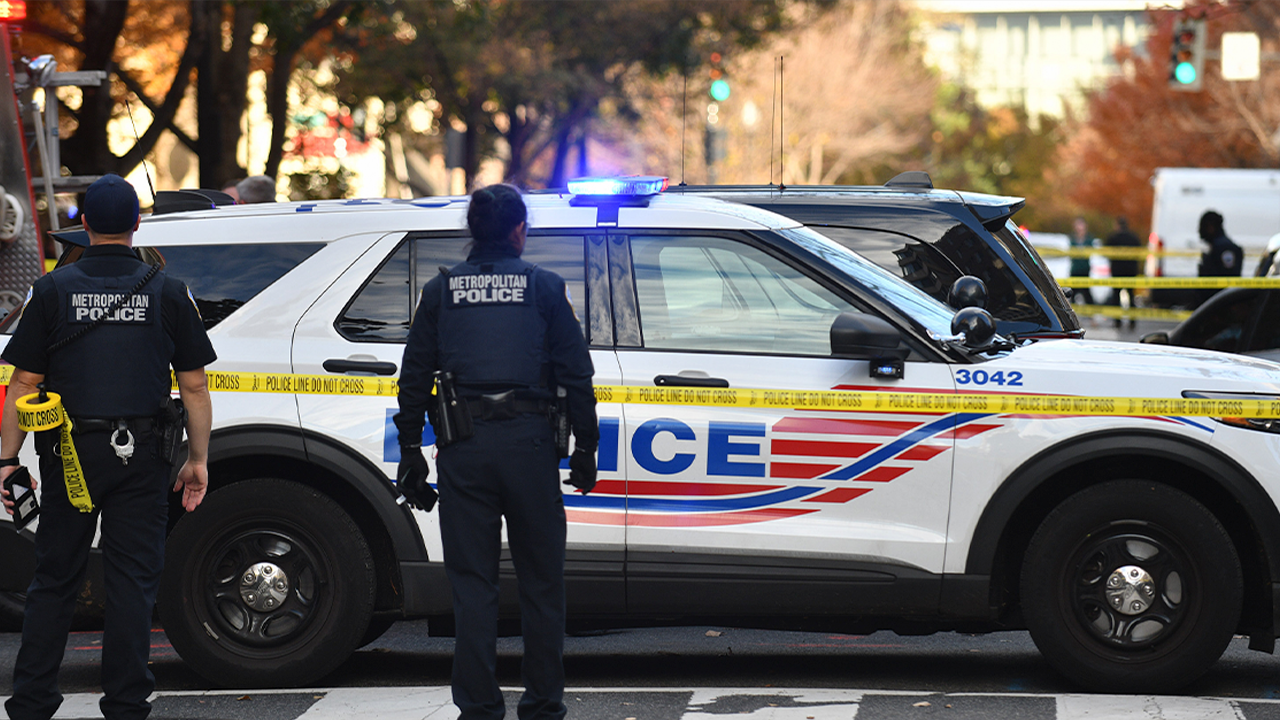
The Metropolitan Police Department in Washington, D.C., is accused of changing crime stats. (Getty Images)
The police commander was accused of falsifying crime data to make crime trends look more favorable for the city, but has denied the allegations. A week before his suspension, Pulliam filed an equal employment opportunity complaint against a higher-up, local outlet NBC Washington reported.
Pulliam is currently under investigation over allegedly changing stats. The Metropolitan Police Department told Fox News Digital Thursday, when asked for additional comment and updates on the case, that it “does not comment on internal investigations or personnel matters.”
FORMER CAPITOL POLICE CHIEF SAYS CRIME BY ‘GANGS OF YOUTH’ IN DC HAS SPIKED, ESCAPED ‘CERTAIN NEIGHBORHOODS’
The accusations over changing crime stats were soon followed by Trump federalizing the police department on Monday in response to a spate of high-profile killings and attacks, as well as a crime wave in the District that has persisted since the 2020 era. The president federalized the local police department under section 740 of the District of Columbia Home Rule Act, which allows the president to assume emergency control of the capital’s police force for 30 days.
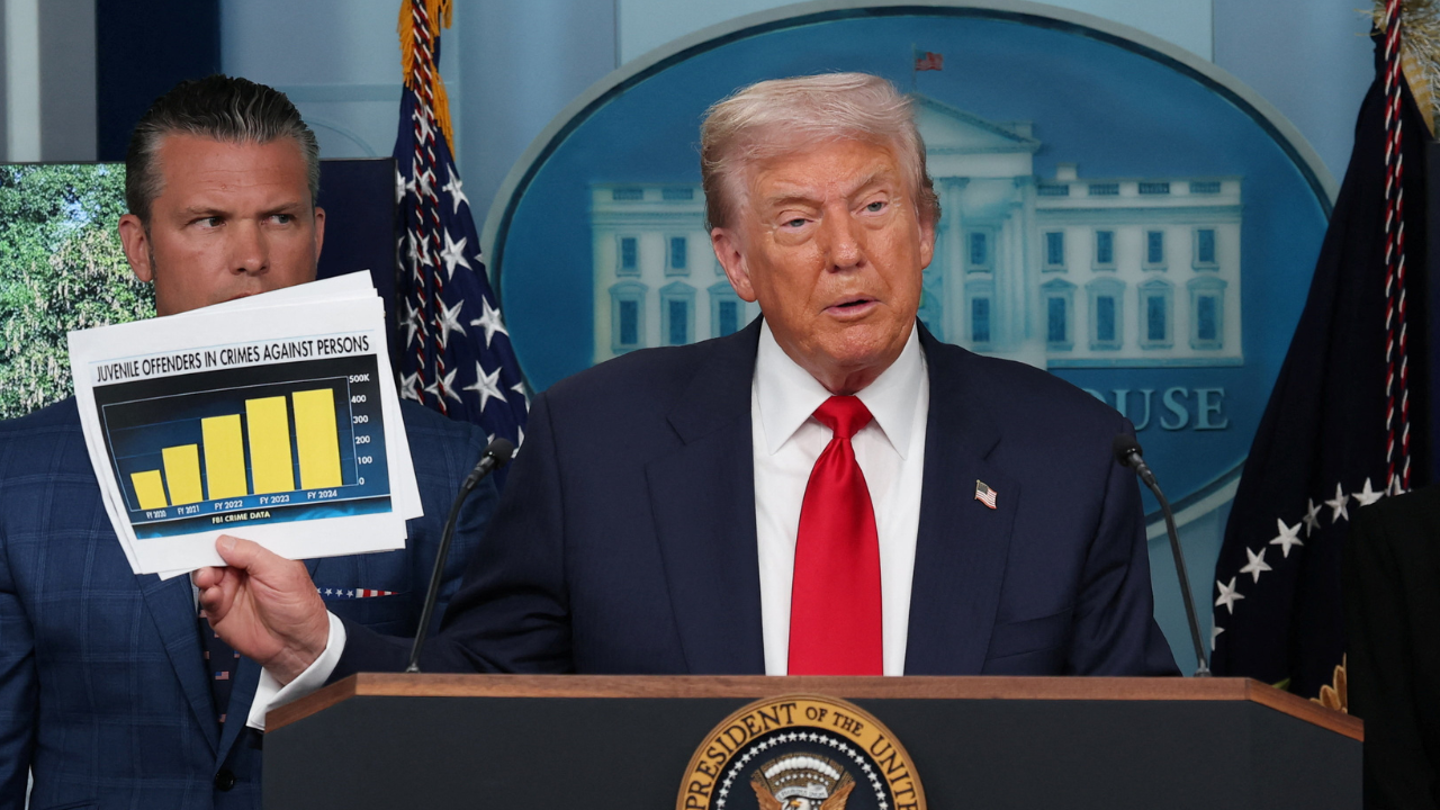
President Donald Trump speaks to the press about deploying federal law enforcement agents in Washington, D.C., Aug. 11, 2025. (Reuters/Jonathan Ernst)
“Our capital city has been overtaken by violent gangs and bloodthirsty criminals, roving mobs of wild youth, drugged-out maniacs and homeless people,” Trump said Monday. “And we’re not going to let it happen anymore. We’re not going to take it.”
“We’re taking it back under the authority vested in me as the president of the United States, I’m officially invoking section 740 of the District of Columbia Home Rule Act,” he added. “You know what that is. And placing the D.C. Metropolitan Police Department under direct federal control.… In addition, I’m deploying the National Guard to help reestablish law, order and public safety in Washington, D.C. And they’re going to be allowed to do their job properly.”
On Thursday, Trump railed against the accusations of manipulating crime data in the District.
“They are under investigation right now,” Trump said Thursday during an Oval Office press conference. “They are giving this phony crime stats just like they gave other stats in the financial world. But they’re phony crime stats. And Washington, D.C., is at its worst point, and it will soon be at its best point. You’re gonna have a very safe, you’re going to have a crime-free city.”
Trump-aligned legal group America First Legal Foundation, which was founded by White House advisor Stephen Miller, exclusively told Fox Digital Thursday that it filed a FOIA request seeking all crime records and data compiled by the D.C. Metropolitan Police Department, including any records “reflecting the falsification or non-publication” of crime data and statistics.
‘RADICAL’ DC OFFICIALS TREATED OFFICERS ‘LIKE CRAP,’ POLICE LEADER SAYS – 7 ATTACKS THAT LED TO TRUMP TAKEOVER
Democratic lawmakers and local liberal leaders have slammed Trump over federalizing the city – which has included hundreds of National Guard members flooding D.C., as well as law enforcement officers from agencies such as the FBI, Drug Enforcement Administration, U.S. Capitol Police and the Bureau of Alcohol, Tobacco, Firearms and Explosives assisting with Trump’s law and order crackdown – claiming crime is at a 30-year low.
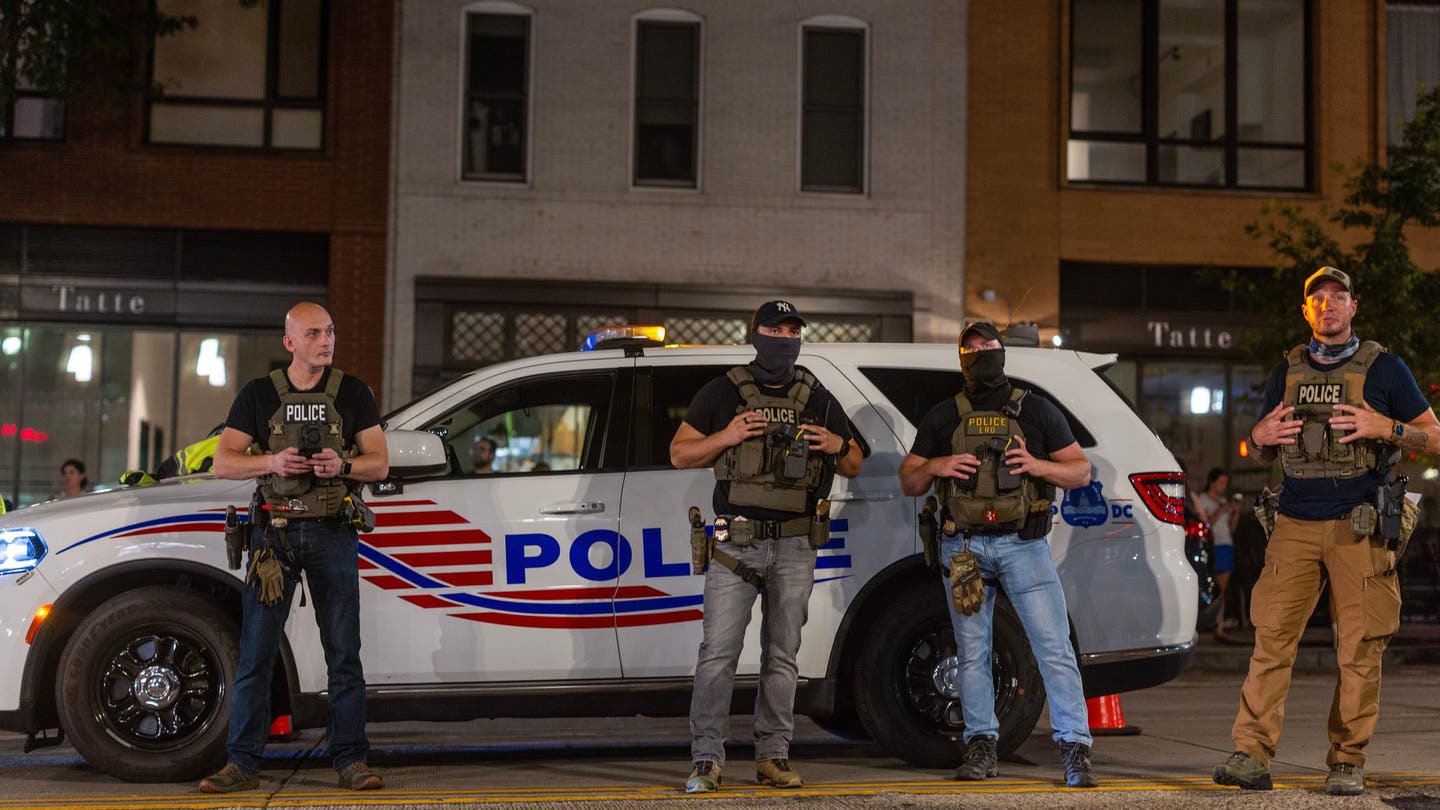
Police officers set up a roadside checkpoint on 14th Street Northwest on Aug. 13, 2025, in Washington, following the federalization of the D.C. police. (Tasos Katopodis/Getty Images)
“Violent crime in Washington, D.C. is at a 30-year low,” House Minority Leader Hakeem Jeffries, D-N.Y., said Monday. “Donald Trump has no basis to take over the local police department. And zero credibility on the issue of law and order. Get lost.”
“As you listen to an unhinged Trump try to justify deploying the National Guard in DC, here’s reality: Violent crime in DC is at a 30-year low,” former Secretary of State Hillary Clinton posted to X.
Washington, D.C., was among the cities caught up in a spiking national crime trend in 2020 – when the COVID-19 pandemic raged and protests and riots overtook cities nationwide – recording 198 homicides that yearwhich marked a 16-year high for the city. Homicides jumped to 226 in 2021, edged down to 203 in 2022 and soared in 2023 to 274 – a 20-year high.
TRUMP CLAIMS DC CRIMES TROUNCE STATS FROM NOTORIOUSLY VIOLENT CITIES WORLDWIDE
D.C. saw homicides drop by roughly 31% from 2023 to 2024, according to year-end Metropolitan Police Department data reporting 187 in 2024. The data shows violent crime across the board fell by roughly 35% from 2023, when the department reported 5,345 incidents, to 2024, when it reported 3,469.
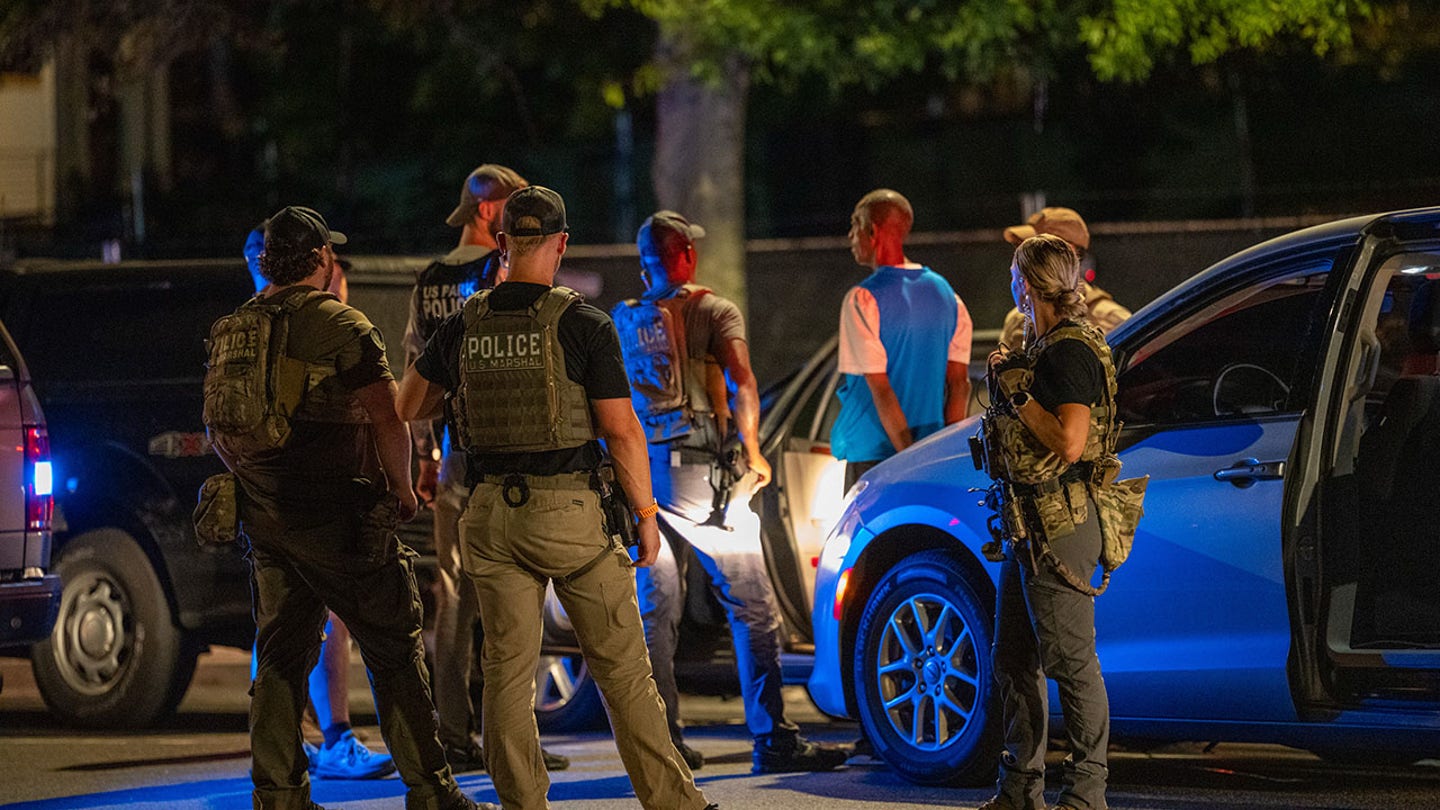
Law enforcement officials make arrests following President Trump’s federalization of the city. (Andrew Leyden/Getty Images)
A study published in July by the Council on Criminal Justice found the chances of a person facing a violent crime in Washington, D.C., have dropped in recent years, but the possibility of dying during such a crime has skyrocketed.
The study examined violent crime data from 17 large U.S. cities between 2018 and 2024, specifically investigating the lethality of violent crimes in those cities. It found Washington, D.C., had the highest lethality level out of the group – which included Baltimore and Chicago – at a 38% increase in lethality in 2024 compared with 2018.
EXCLUSIVE: TRUMP-ALIGNED LEGAL GROUP FILES FOIA REQUEST FOR DC CRIME DATA, CITING ALLEGED MANIPULATION
Lethality in D.C. jumped by a whopping 341% when compared to 2012 data, the study found, reporting that there were 13 homicides per 1,000 serious violent crimes in 2012 to 57 homicides per 1,000 serious violent crimes in 2024.
The study defined lethality as “the number of homicides per aggravated assaults and robberies.”
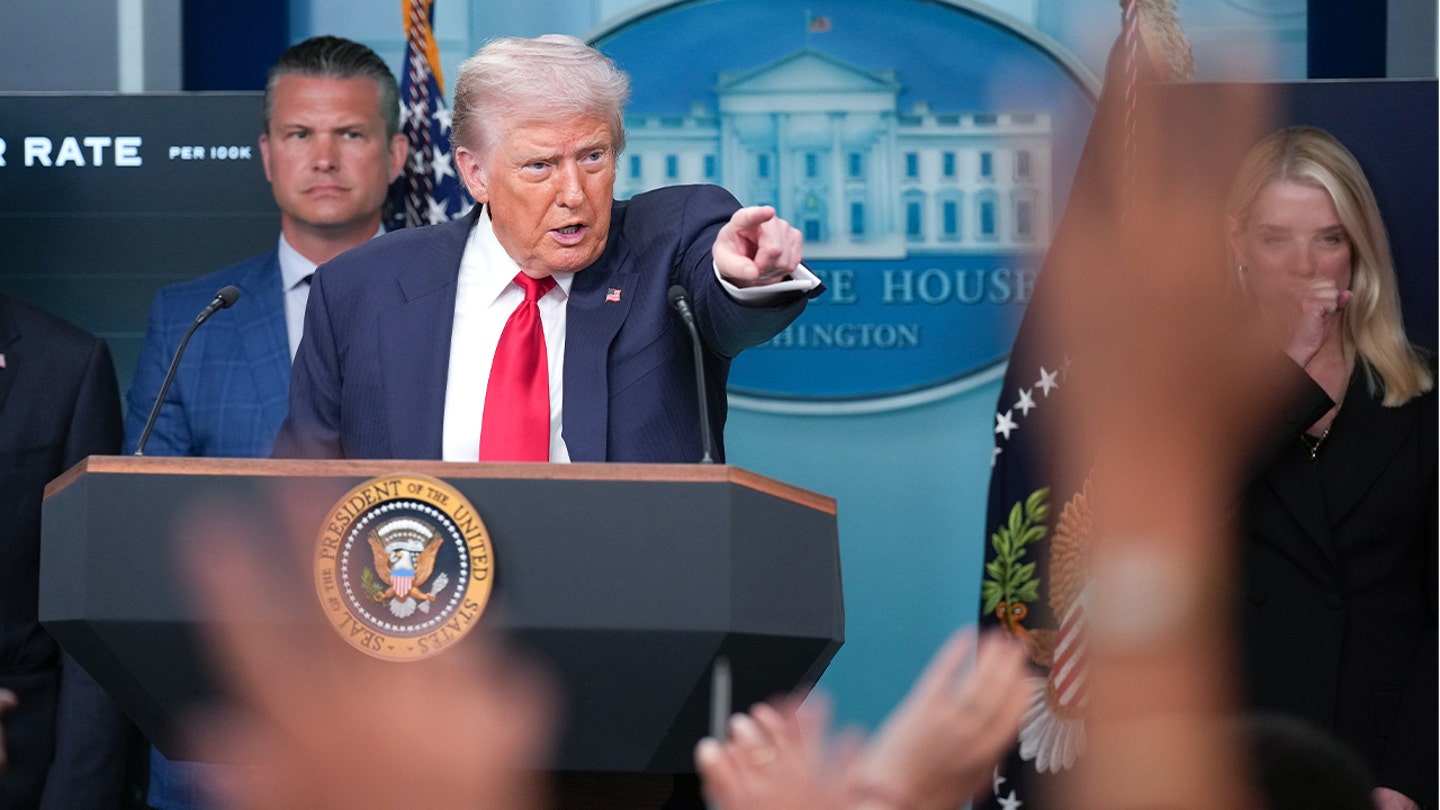
President Donald Trump announced the federalization of Washington, D.C.’s police force on Aug. 11, 2025. (Getty)
“You have less chance of being victimized, but if you are victimized, you have more of a chance of dying,” John Jay adjunct lecturer Jillian Snider, a retired New York Police Department officer, told Fox News Digital Tuesday of violent crime trends in the nation’s capital.
The District’s police union chief told Fox News Monday that it supports Trump’s federalization while slamming claims crime has ticked down in the city.
“We completely agree with the president here that crime in the district is out of control and something needs to be about it,” Pemberton said in support of Trump’s actions during an interview on FOX Business. “This concept that crime is down is really an old trope. They’re using statistics in a way that makes it appear that crime is going down, but our rank-in-file officers know that we’re going call to call to call, for armed carjackings, stabbings, robberies, shootings, homicides and the crime isn’t going anywhere.”
Fox News Digital reached out to the union for additional comment on the matter, but did not immediately receive a reply.
Fox News Digital’s Hannah Panreck and Breanne Deppisch contributed to this report.