Fraser River Salmon returns this year a ‘real chance to celebrate’, say harvesters
Guy Johnston is fishing near the BC limit with Southeast -Alaska.
On the phone he tells CBC News that fishermen know that they are expecting challenging seasons.
“That is understood all over the world, and kisses kisses everywhere [with] Fisheries communities – There will be difficult times, “he said.
“The downside of that is what we see now, if a real premium comes in, it is a real chance to celebrate.”
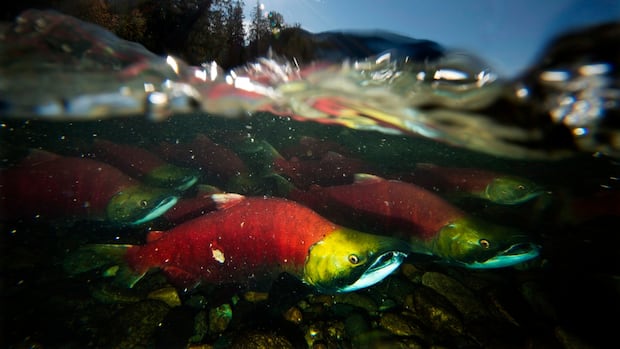
Johnston, who has been fishing for 50 years, is one of the many that this year celebrates the Fraser River Sockeye Salmon returns and the estimated 6.3 million fish.
That is higher than the estimate of 2.3 million for the season, and more than 13 times the estimated 474,000 fish from last year, according to figures from the Pacific Salmon Commission and Fisheries and Oceans Canada (DFO).
“These good returns, it means for us as fishermen … We complement our economy,” says Johnston, who is also the secretary-treasurer of the United Fishermen and Allied Workers’ Union (Ufawu-Unifor).
“It means in our communities … people are going to eat this beautiful protein.”
The data was shared earlier this week by Ufawu-Unifor, on behalf of independent fish harvesting machines, representatives at the Area Harvest Committee and organizations, including the Pacific Salmon Commission, Fraser River Panel, BC Seafood Alliance and T. Buck Suzuki Foundation.
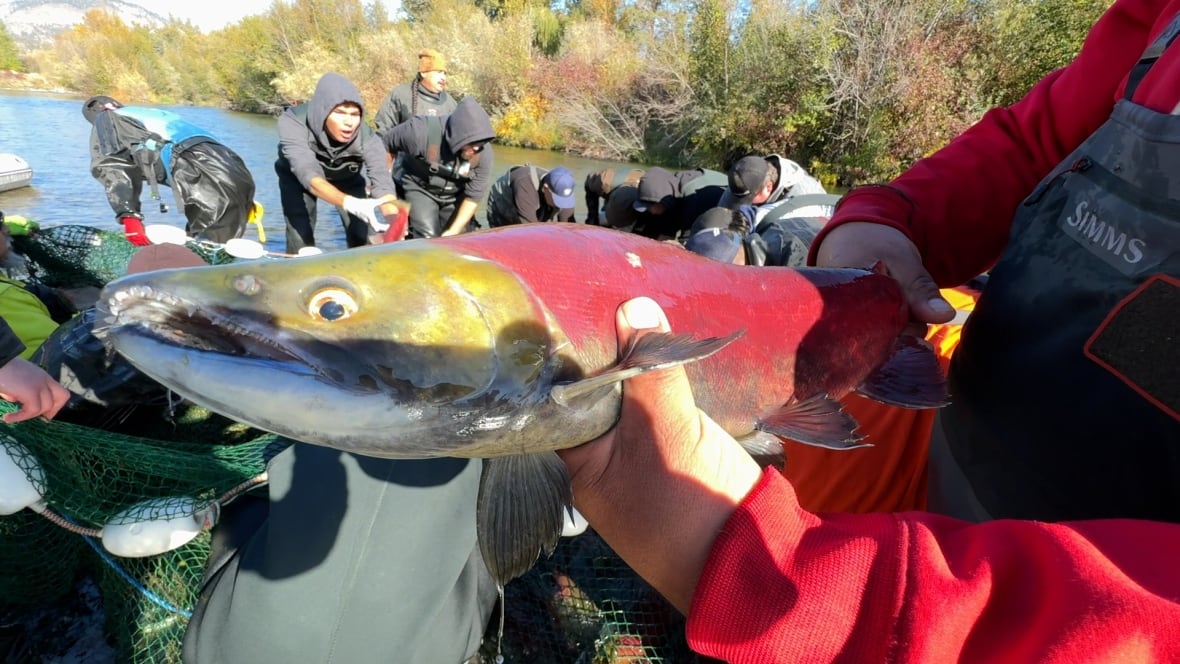
The group attributes the increase, partly to efforts of First Nations, Commercial Harvesters and the DFO to rebuild Zalm stocks and habitats over the years.
Bob Chamberlin, chairman of the First Nation Wild Salmon Alliance, points to the removal of open-network Pen fish farms in the Discovery Islands.
Have the farms long the subject of debateWith environmental groups and some First Nations who say they are linked to the transfer of diseases to wild salmon. Work to turn them off set In 2020, with more than a dozen farms closed since then. However, some open-network fish companies continue to operate outside the Discovery Islands, whereby the BC government slows down their closures from 2025 to 2029.
“I don’t want the government to see this, as you know, wash their hands and the work has been done,” says Chamberlin about the salmon increase this year.
“This is an opportunity to build, to realize the importance of wild salmon for British Columbians and First Nations and the Environment, and start mapping a course of building nation with this source because the benefits are so far -reaching.”
In a statement to CBC News, DFO says, although it is not possible to attribute the size of the returns to a single factor, it is certain that this great return would not have taken place “without the efforts of First Nations and the federal and provincial governments to restore fishing at the Grotebartarstream.
The landslide, which occurred north of Lilloet, BC, In June 2019 But was not discovered until June the following year, blocked the passage of the migrating of the Fraser River – Salm – so that thousands of fish would reach the electric waterways in which they were born and which they have to reach to spawn.

The DFO says that the investment in Broederij infrastructure has released the release of thousands of more Juvenile Sockeye Salm to help rebuild after the slide after the slide and that this year’s run “the first breeding year returns” after the fishing had restored in 2021.
Given the abundance, DFO says that First Nations Fisheries for Food, Social and Ceremonial Purities are given the first priority for fishing, and further opportunities for countries, as well as commercial and recreational fishing, are assessed as more information about salmon returns is collected.
Christina Burridge, executive director of the BC Seafood Alliance, says it is important to harvest the salmon to prevent overcrowding on the Paa soils.
“First of all, you waste proteins … and secondly, it just has a really negative cycle where the fish cannot find enough spawning grounds and die so many of them without spawning,” she said.
In the meantime, Visser Johnston says that in Cowichan Bay, where he lives in the low season, people celebrate the premium.
“You see it in my community. You see it all along the coast. There is a real celebration. “